The most quietly misleading number on a food package is not a claim on the front. It is the serving size on the back. Every figure on the nutrition panel — the energy, the sugar, the salt — is measured against a serving, and the maker gets to decide how big that serving is. Sometimes it matches how a person would really eat the food. Often it does not. A "single" bottle of soft drink can list two and a half servings. A tub of ice cream might be portioned into four. The panel is not lying; it is answering a question about a spoonful when you asked about the pack. This guide shows you how to find the serving size in seconds, count how many servings the pack holds, and do the small piece of mental arithmetic that turns a per-serving figure into the number you actually care about.
Find the serving size first
Before you read any other number, find two lines near the top of the panel: the size of one serving, and how many servings the pack contains. They are usually printed together, something like "Serving size: 30 g. Servings per pack: 8." Read those two lines and the rest of the panel snaps into focus. Skip them and every figure below is floating without a scale.
Some panels help by printing two columns — one per serving, one per 100 g or per 100 ml. The per-100 column is the honest comparison tool, because it lets you line up two products of different pack sizes on equal terms. The per-serving column tells you what one portion delivers, as the maker defines a portion.
Two lines to read first: how big is a serving, and how many servings are in the pack? Everything else depends on these.
Count the servings you will actually eat
The trap is treating a per-serving number as a per-pack number. If a bag of crisps says 3 servings and you eat the bag, three times the panel is your real total. The maths is simple; the habit of doing it is what people skip.
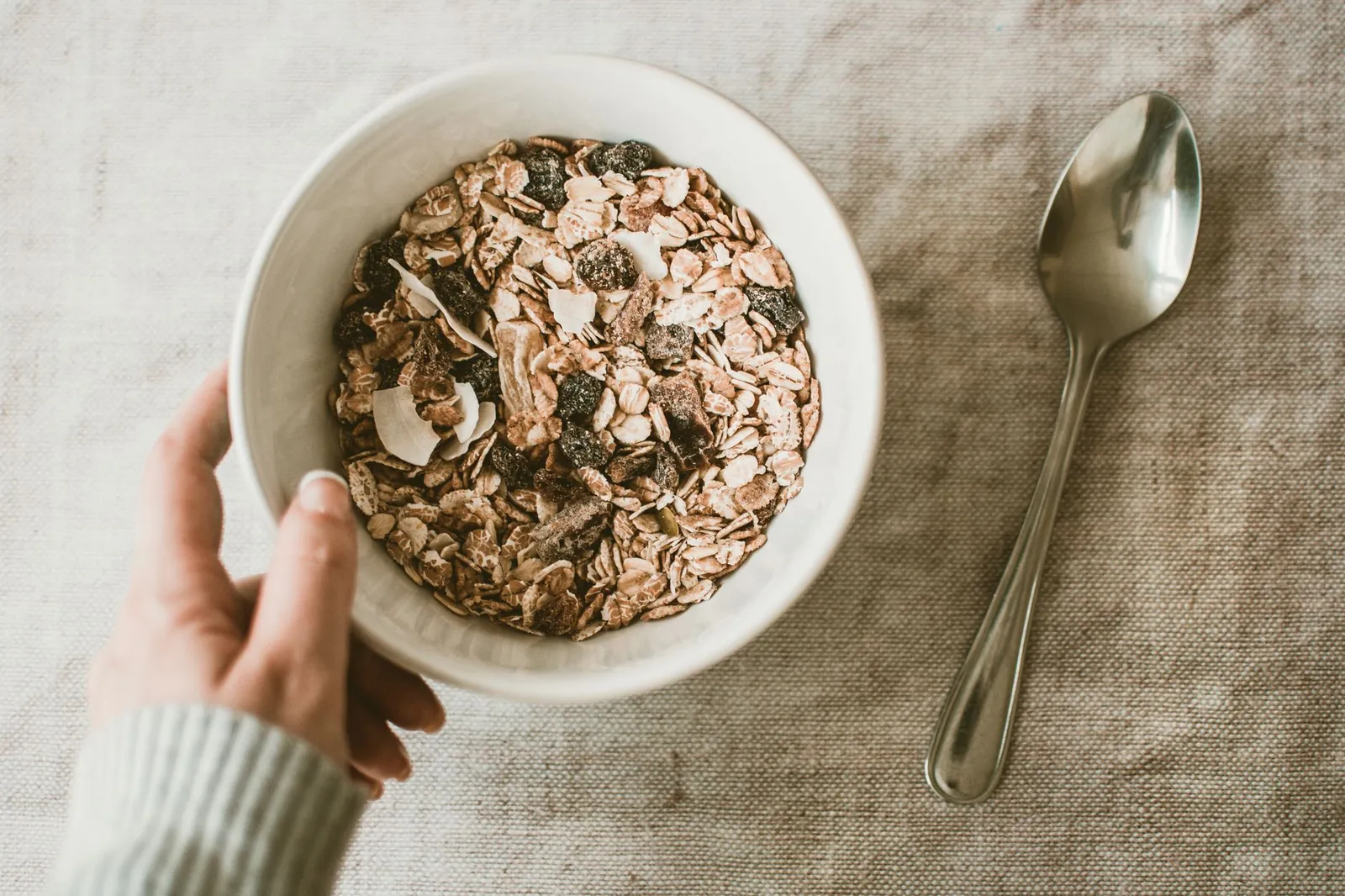
Take a muesli as an example. The panel might be built on a 45 g serving, which is a modest bowl. If you pour what feels like a normal breakfast and it comes to 90 g, you have eaten two servings, so double every figure on the panel. Nothing on the label was wrong. You simply ate two of the maker's servings and read the numbers for one.
The panel answers a question about one portion. If you eat the pack, you have to ask the pack-sized question yourself.
A worked example
Two drinks sit in the chiller. Bottle A is 250 ml and lists one serving. Bottle B is 500 ml but the panel is written per 250 ml, so it lists two servings. At a glance the two panels look almost identical, which makes Bottle B look like the same drink. Read the serving lines and the picture changes: if you drink all of Bottle B, you double its panel. Same-looking numbers, twice the amount.
Use per-100 to compare fairly
When you want to compare two products, the per-serving column can mislead, because two makers may have chosen different serving sizes. One yoghurt priced its panel on a 100 g pot; another on a 150 g pot. Their per-serving sugar figures are not comparable. The per-100 g column is. Line up the per-100 numbers and you are comparing like with like, whatever the pack size or the maker's chosen portion.
- Same food, two brands? Compare per 100 g or per 100 ml.
- Deciding what one portion gives you? Read the per-serving column, then check the serving is realistic.
- Planning to finish the pack? Multiply the per-serving figures by the servings per pack.
When the serving size is unrealistic
Sometimes the listed serving is far smaller than anyone eats — a couple of biscuits from a packet meant to be shared, or a third of a small dessert. That is not against any rule; serving sizes are guided by convention, not by how hungry you are. The fix is not outrage, it is arithmetic. Decide how much of the pack you will really eat, work out how many servings that is, and scale. Once you are in the habit, it takes a few seconds and it makes every other number on the panel mean what you thought it meant.
Where the rules can vary
Countries differ on how serving sizes are set and displayed. Some require a per-100 column so shoppers always have a fair comparison; some standardise servings for certain foods; some leave the serving largely to the maker. Reference amounts and the exact wording change from place to place. The reading habit does not: find the serving, count the servings, and scale to what ends up on your plate. That works on any panel, wherever it was printed.
The habit: read the two serving lines first, then decide whether you want the per-serving, per-pack, or per-100 view before you read a single nutrition figure.