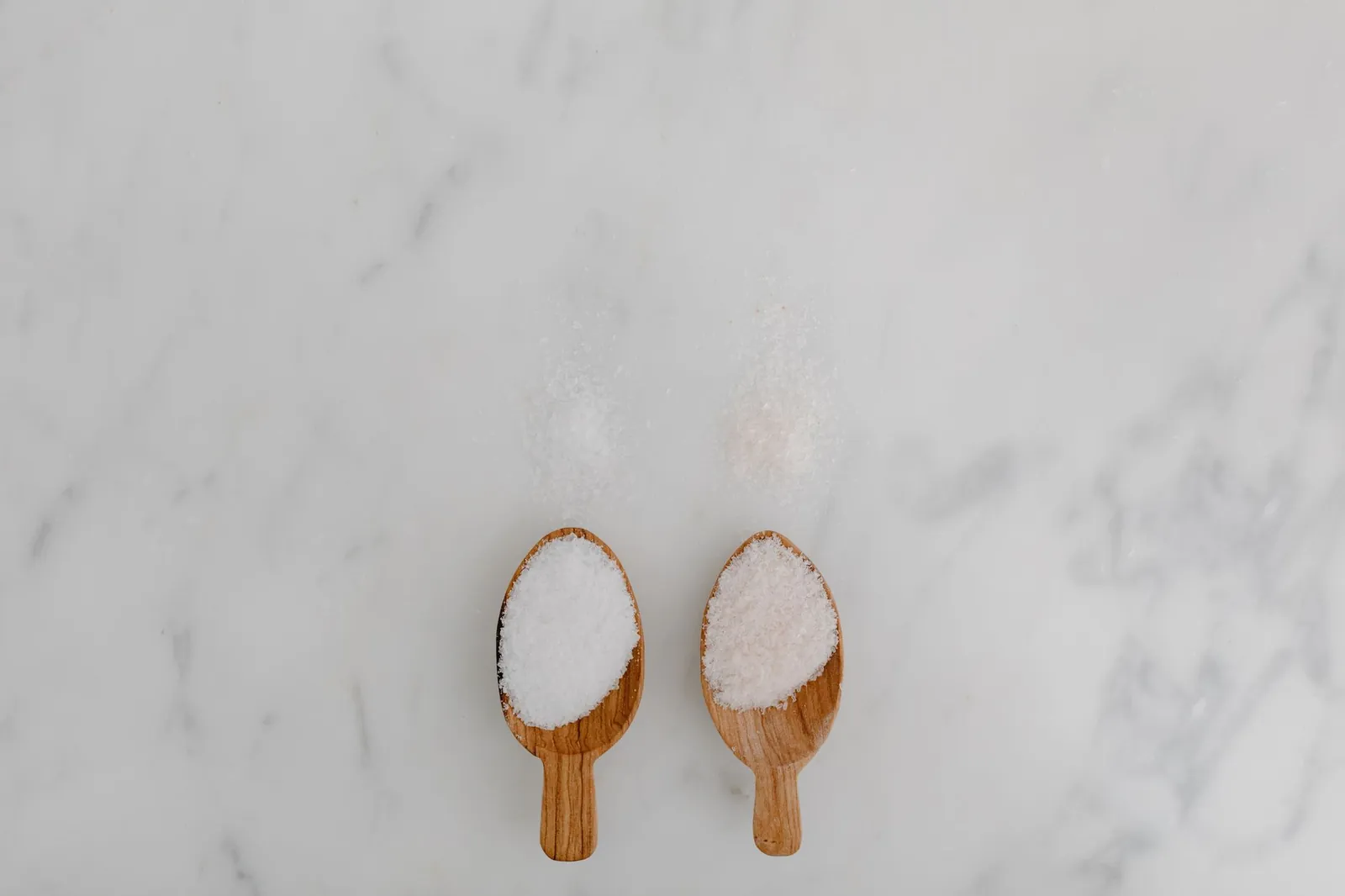
Salt and sodium are related but not identical, and the gap between them is where a lot of confusion on a food label lives. Table salt is a compound — sodium joined to chloride — and only part of its weight is sodium itself. That is why a panel that lists "sodium" shows a smaller number than one that lists "salt" for the very same food, and why comparing a sodium figure on one pack to a salt figure on another can quietly mislead you. Sodium also shows up in an ingredient list under names that never mention salt at all, from raising agents to preservatives to flavour enhancers. None of this is a trick; it is just chemistry and labelling convention meeting on a small printed panel. This guide untangles the two words, shows you how to read whichever one your panel prints, and points out where sodium hides on the ingredient list.
Salt is not the same word as sodium
The single most useful fact here: salt and sodium are two different figures for the same thing, and salt is the bigger number. Because salt is only partly sodium by weight, a food's salt figure is always higher than its sodium figure. Roughly, salt is about two and a half times the sodium value — so a small sodium number can correspond to a noticeably larger amount of salt, and vice versa.
You do not have to do this conversion in your head at the shelf. You just have to know which word your panel is using, so you compare like with like. If one pack lists salt and another lists sodium, they are not on the same scale until you account for the difference. When both packs use the same word, you can read them straight across.
Key fact: salt and sodium are two figures for the same thing. Salt is always the bigger number. Compare salt to salt, or sodium to sodium — never mix the two.
Read whichever line your panel prints
Panels differ by region. Some print a "salt" line; some print "sodium"; a few print both. Whichever your panel uses, the reading method is the same as everywhere else on the label: check the serving size first, then read the salt or sodium figure per serving, and look at the per-100 g column if you want to compare two products fairly.
The per-100 g view is especially handy for salt and sodium, because it lets you rank foods that come in very different pack sizes. A per-100 g figure answers "how salty is this food, gram for gram?" — which is usually the question you actually have when two similar products sit side by side.
You never need to convert salt to sodium in the aisle. You only need to make sure both packs are speaking the same word.
Where sodium hides on the list
Plain "salt" is easy to spot on an ingredient list. Sodium in other forms is less obvious, because the word "salt" is nowhere in sight. A few names to recognise:
- Sodium bicarbonate (baking soda) — a raising agent in baked goods.
- Monosodium glutamate — a flavour enhancer, often shortened to MSG or shown by a code number.
- Sodium nitrite and sodium nitrate — preservatives common in cured meats.
- Sodium benzoate — a preservative in some drinks and sauces.
- Yeast extract — brings a savoury, salty taste and adds sodium without the word "salt".
Spotting these on the list explains a panel that shows more sodium than a quick look at the food would suggest. A sauce can taste only mildly salty yet carry sodium from several of these at once.
A worked example
Two packs of crackers. Pack A lists salt fourth in its ingredients, and its panel prints a modest salt line. Pack B lists no obvious "salt" near the top, but its ingredients include yeast extract and sodium bicarbonate, and its panel — printed in sodium — looks low until you remember it is on the smaller sodium scale. Convert nothing; just note that Pack B's sodium figure is not directly comparable to Pack A's salt figure. To compare them properly, you would read both in the same unit.
Where the rules can vary
This is the label area where wording differs most from country to country. Some regions mandate a salt figure, some a sodium figure, and front-of-pack colour codes or warning symbols for high salt exist in some places and not others. Reference intakes and the thresholds behind "low" or "high" labels also vary. The constant is the habit: identify whether your panel says salt or sodium, keep comparisons within the same word, and read the ingredient list for the sodium-bearing names above. Do that and the numbers stay honest wherever the pack was printed.
The habit: note whether the panel says salt or sodium, compare within that same word, and scan the ingredient list for sodium under other names.